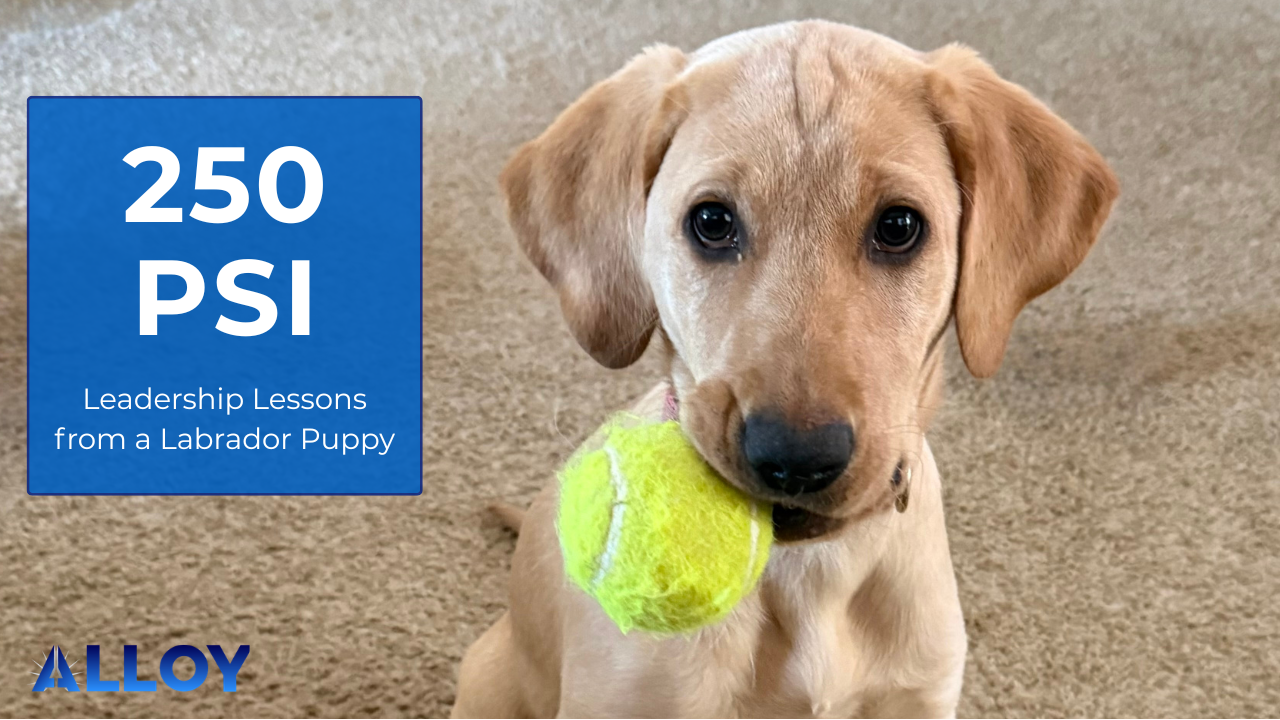
250 psi: Leadership Lessons from a Labrador Puppy
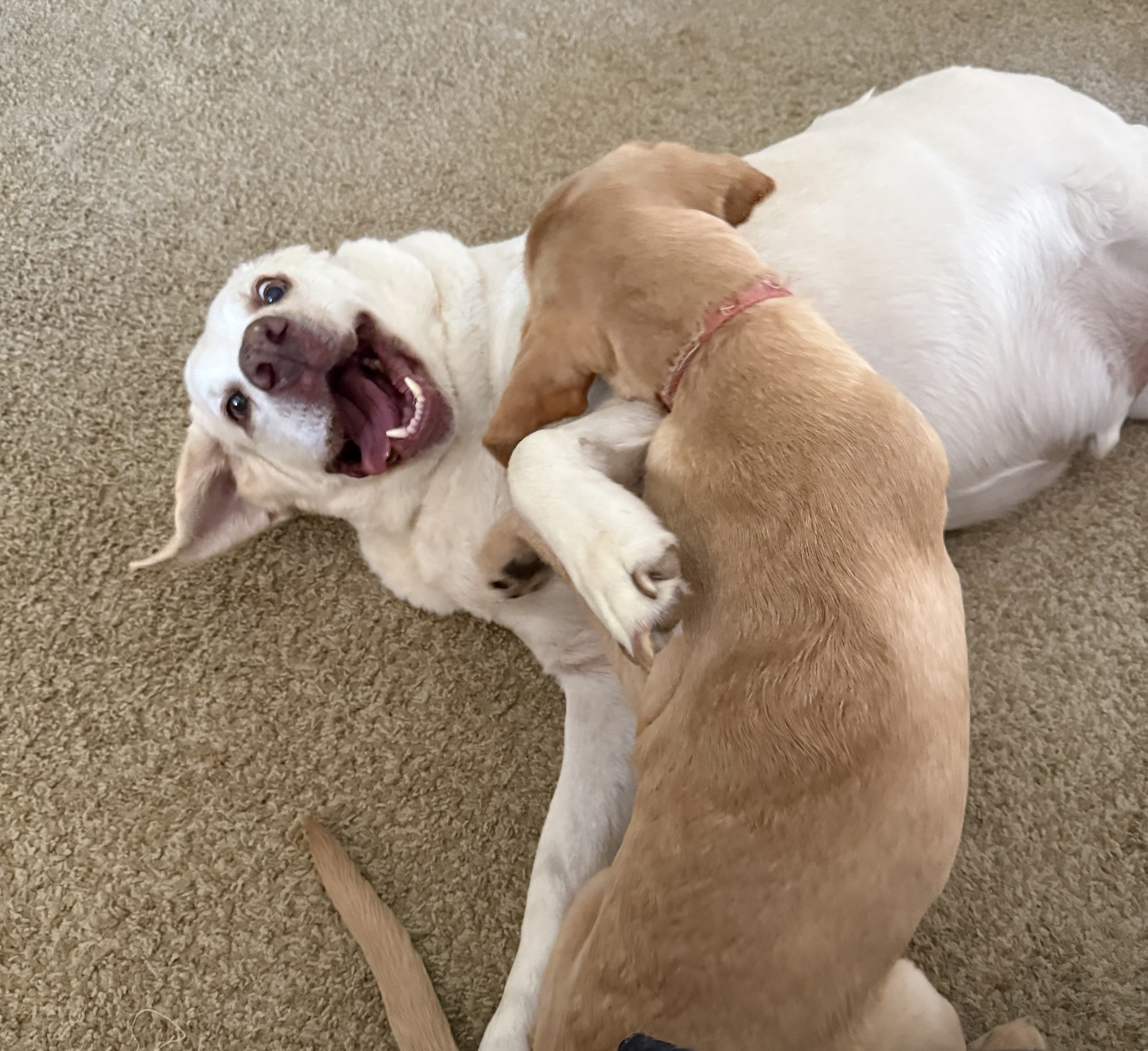
Our newest family member is unknowingly teaching us valuable lessons about leadership. Meet four-month-old Dottie – precocious younger sister to the wiser, calmer eight-year-old Denver. We’re in the full-on teething phase where those razor-sharp teeth find themselves embedded in any and every available surface, including human arms, hands and feet. Blood has been drawn and redirection and training is happening at every one of these painful learning opportunities. Thankfully, we know this is just a phase and with proper attention and training she’ll be using that “soft mouth” and gentle spirit that Denver and other labradors are known for. I’m encouraged in these painful moments by watching Denver gently receive toys, treats, and any and all attention from his humans, including our toddler grandchildren. In his presence, our fingers and toes are safe and none the worse for wear. The remarkable thing that helps us in training Dottie isn’t that Denver has teeth. It's that Denver knows how not to use them.
An adult Labrador possesses an incredibly powerful bite - estimated around 250 pounds per square inch. Strong enough to crush remarkable things. What about a pup, you ask? They’re starting at 100 psi on their way to that 250. For reference, most of our car tires run on 32-38 pounds of pressure. A semi-truck tire is 100 – 120 psi. To get to a similar jaw strength of an adult labrador, we have to look to industrial tools – concrete nailers (200-300 psi) or heavy duty pneumatic lifts (250 psi). Yet many Labs spend their lives carrying waterfowl, birds, toys, and children's hands with astonishing gentleness. That doesn't happen accidentally. It's trained. Leadership works the same way. Here are six quick leadership lessons literally pulled from the jaws of a labrador retriever.
1. Strength Isn't the Issue. Many organizations make a mistake right here: individual contributors often get promoted into leadership because they are direct, forceful, results-oriented and driven. Turn these tools on people rather than the processes where they found success and the trouble begins. Then, some weak leaders try to strip the new leaders of the very qualities that got them there, rather than teaching them how to direct and channel those strengths. But effective leadership isn't about becoming less powerful. It's about becoming more intentional. The goal isn't fewer teeth. The goal is a softer mouth.
2. Every Strong Leader has 250 psi Capability. Some leaders naturally possess tremendous force. Their words move people. Their standards raise performance. Their confidence inspires action. It comes so naturally to them like it’s part of who they are. Unfortunately...the very traits that create momentum can also create wounds. One sentence. One email. One meeting. The damage wasn't intentional. But impact always outweighs intent. Even more unfortunate is when a leader or team unintentionally reinforces it. “Oh, that’s just (insert name). Everyone knows how she is.” Or, “give him an extra wide berth today. It’s one of those days.”
3. Puppies are a Powerful Example for Leaders on Strength Management. For every bit as destructive as sweet Dottie’s teeth can be right now, she can also be as cuddly, eager to please and downright funny and clumsy. Oh, and that puppy breath. We know puppies nip. They grab. They chew. And little Dottie is no exception. She’s the sixth labrador that’s been part of our family and we’ve learned as owners to teach them something remarkable: "You don't have to stop using your mouth. You simply need to learn how much pressure this moment requires." That's also leadership. Every difficult conversation asks: How much pressure does this person or situation need today? Not every conversation calls for 250 psi.
4. Strength With Awareness is a Powerful Combination. We’re strong believers in the power of curiosity and asking questions at Alloy, and regularly discuss leveraging this strength with business leaders and coaching clients. A leader's questions can become:
- Is this correction or condemnation?
- Am I proving a point or helping someone grow?
- Am I using all my strength simply because I have it?
- Will this person leave stronger...or smaller?
- Is this a “can’t” or a “won’t” situation with this person’s performance?
Great leaders don't become passive. They become aware and calibrated.
5. The Best Labs and Leaders Know Both. The same Labrador who gently carries a duck... can instantly protect a child. The same mouth. Different pressure. Leadership requires the same flexibility. Some moments require reassurance. Others require conviction. Wisdom is knowing which one the situation demands. I had a leader in executive coaching tell me years ago, “I’m getting rid of my D, Jamie!” His reference, from the DISC personality assessment, was referring to his natural style of being direct, decisive and sometimes dominant. In learning to adapt his leadership to those non-250 psi moments, he had errantly understood that he must let go of his natural talents that are a critical part of his success. His exclamation was an aha moment for me as well – had I inadvertently given him that impression?
The good news is leadership growth does not involve eliminating entire parts of one’s personality. Rather, we can learn the skills to leverage our natural strengths and make the most of them for our teams and organizations.
6. Soft Doesn't Mean Weak. One of the biggest myths in leadership, especially in certain industries, is that gentleness equals weakness. It doesn't. Anyone can explode. Not everyone can restrain themselves. Self-control is strength under voluntary control. In this sense, perhaps the goal of effective leadership isn’t becoming less powerful. Perhaps it's becoming so aware of your power that people trust you with it. The strongest leaders aren't those who never have to use 250 psi. They're the ones who know exactly when to use 20. And because they can be trusted with their strength... People willingly follow them.
A Closing Challenge: Tomorrow, before your first difficult conversation, ask yourself: "What amount of pressure does this person need from me today?" Not every conversation deserves 250 psi. The leaders people remember aren't the ones who proved how strong they were. They're the ones who made others feel safe in the presence of great strength.
Every leader has been entrusted with a certain amount of "psi"—authority, intelligence, experience, charisma, position, expertise, personality. The question isn't whether we possess it. The question is whether others feel safer, stronger, and more confident because of how we use it.
(