So You're a Manager! Now what?
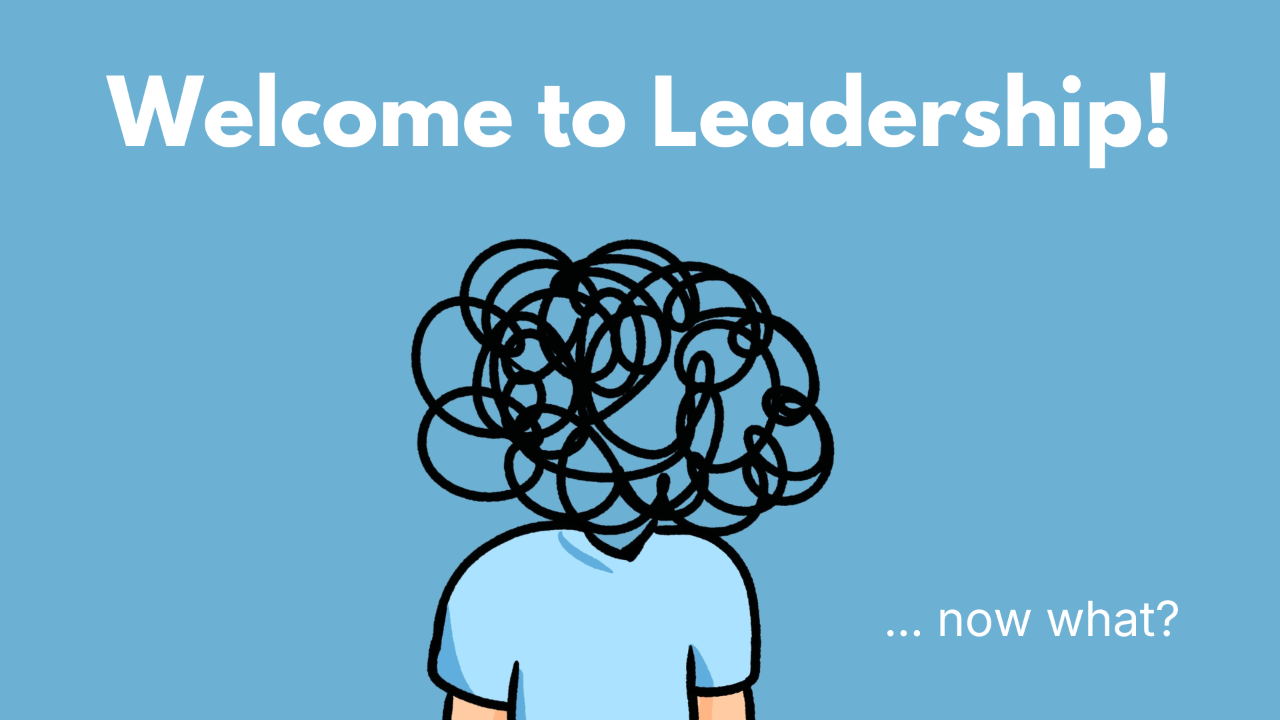
Congrats!
Hey, congratulations! You did it!
After years of strong performance, stretch assignments, professional development courses, and countless podcast hours, you finally got that promotion you’ve been chasing for so long.
You can officially say, “I’m a manager.”
So… now what?
Why This Transition Is So Difficult
I’ve spent the last decade helping new managers adjust to the demands of their new responsibilities. Candidly, I’ve seen some leaders who never fully made the transition — and their teams suffered for it, sometimes for years on end.
Some were incredibly strong individual contributors who struggled with the realities of leadership. Not because they lacked capability, but because the skills that make someone a great contributor are not the same skills that make someone highly effective at leading people and delivering results.
Whether you’re brand-new to people leadership (in which case, seriously, congratulations!), or a senior leader with decades of experience, here are a few considerations to help you make the leap from doing to leading — and support your new team members along the way.
The Shift From Doing to Leading
The first, and perhaps biggest, challenge new leaders face is how they transition into leadership.
For most leaders, that first promotion to management is treated like just that: a promotion. The next logical step in a high performer’s career ladder. This is a mistake.
Your first management position is more than a promotion; it’s a career change.
The reality of stepping into leadership is this: the skills that made you a great individual contributor are not the same skills that will make you an incredible manager.
Simon Sinek lays this out quite clearly in one of his iconic talks:
“We have to go through this transition of being responsible for the job, and then turning into somebody who is now responsible for the people who are responsible for the job.”
Put another way, most of the “doing” skills that got us here are separate from the “managing” skills we need now.
“Uh oh,” you might be thinking. “This is a monumental shift. Those doing skills are kind of my go-tos. My professional brand is based on delivering results that impress my managers and delight my clients.”
If you’re feeling some doubt (or maybe a little impostor syndrome) know that you’re not alone.
I once asked a room of about 100 leaders, “Who here got promoted because of their performance as an individual contributor?” Nearly every hand in the room went up. In fact, across my career, nearly every leader I’ve worked with was promoted because of their skills and tangible results as an individual contributor.
But to be a great leader, that has to change now.
Going forward, success will be defined by your ability to communicate, set expectations, build relationships, give feedback, and enable your team to deliver the kinds of results that got you this long-desired promotion in the first place.
And you know what? You can do this.
Seriously. This is a marathon, not a sprint. Take a deep breath, and do the next right thing.
(Yes, that’s a line from Frozen 2. This leadership insight is brought to you by my 5-year-old daughter.)
Your First 90 Days
So where do we begin? Let’s look at a few pillars of strong management that can help build a strong foundation.
Prioritize Great 1:1s
When was the last time you had a truly great 1:1 meeting? Yesterday? Last quarter? Last year? In my experience, too many 1:1s are wasted on updates — meetings that could have been emails.
1:1 meetings are a manager’s best friend. They’re one of the single greatest tools you have to both gauge and influence employee engagement on a personal level, while also building strong relationships with your team. Set recurring 1:1s with each of your employees and make sure each one is worth the time on the calendar.
Find the Feedback Model That’s Right for You
Feedback is one of the most reliable and cost-effective tools a manager has to influence performance in both the short and long term.
There are dozens of feedback models out there. Find one that feels natural for your communication style. Personally, I like the SBI approach from the Center for Creative Leadership. Please, whatever you do, do not - DO NOT - rely on the compliment sandwich to deliver important feedback. Kim Scott has some great insights (and a colorful name) for this approach in her book, Radical Candor.
Set Up Your Calendar
I’m going to rip the Band-Aid off for you: You are about to lose control of your calendar.
Brace yourself for meetings. Meetings, meetings, and more meetings.
I’m telling you now because too many leaders aren’t prepared for the oncoming assault on their schedules. So stake off some time right now. Pick an hour or two every week that’s just for you. Great examples include focused work, catch-up time, professional development, or simply time to think.
I recommend finding windows when you do not normally have meetings, though that may shift over time. This could become the only time you get to breathe, reflect, prepare, and actually lead proactively instead of reactively. Block it off now and defend it with everything you’ve got.
Remember: It’s About the Relationships
If you can only do one thing in your first few months as a leader, make it this: Invest in building relationships with the people around you.
As the old adage says, “People do not care how much you know until they know how much you care." Your relationships enable your leadership — not the other way around.
Meetings are better with people you know. Feedback is easier, and goes farther, with someone you trust. John Maxwell has a great anecdote in one of his earlier books about an executive who hustles into work one day, walks straight past rows of busy employees, and disappears into his office.
When John points out that he didn’t greet or acknowledge anyone on his way in, the executive explains: “I just have so much work to do. I don’t have time to talk.”
John responds in classic Maxwell fashion: “Look out there. They are the work.”
Leadership is a people business. Start with your people, and let the rest follow.
You’ve Got This
I won’t sugarcoat it: leadership is hard, and it’s not for everyone.
But it can also be deeply rewarding, and anyone can learn the skills that make a great leader. Give yourself some grace and trust that you can grow into the leader your team needs.
The good news is that you are not alone. Most managers spend nearly a decade on the job before receiving formal leadership training. Ten whole years!
These days, there’s no need to wait that long. There are thousands of books, podcasts, courses, conferences, coaches, and communities available for leaders who want to accelerate their growth and avoid learning everything the hard way.
So take a deep breath, roll up those figurative sleeves, and remind yourself that you can do this. Invest in relationships. Practice the systems that enable great leadership. Keep learning.
And if this newsletter helps make that journey even a little easier, then we’re already headed in the right direction.
Want Support for Your Leaders?
Alloy Solutions helps organizations develop stronger leaders through leadership training, coaching, workshops, and team development programs focused on improving both people and performance.
Whether you’re supporting brand-new managers or experienced leaders navigating new challenges, we would love to help.
If this written piece was valuable to you, feel free to reach out, follow Jamie or Ryan on LinkedIn, or share this edition with another leader on your team.
